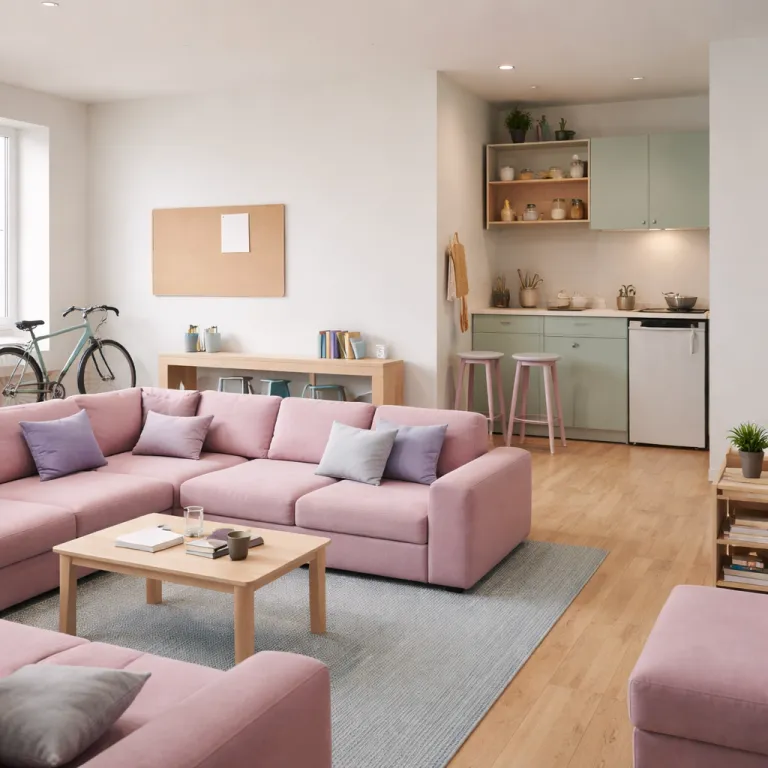
The real promise behind co-living student housing trends
Co-living student housing trends began with a simple, radical idea. The model promised that a student could trade anonymous renting for shared living where the kitchen table mattered more than the marketing brochure, and where housing costs stayed sane even as city prices climbed. Co-living was never meant to be a lifestyle logo; it was a practical response to high demand for student housing in dense urban spaces.
At its core, co-living is a housing model where residents share living spaces and amenities. A 2023 survey by the Global Student Living Index, drawing on feedback from tens of thousands of residents across multiple regions, indicates that a majority of new student housing developments now integrate co-living style amenities, and that shift is reshaping how students, young professionals and digital nomads think about every place to stay near a college campus. When you scroll a luxury student accommodation platform, you are not just browsing rooms; you are reading the latest chapter in global housing trends.
The global co-living market is expanding fast, with a projected 13.5% annual growth rate that signals both investor confidence and rising student demand, according to sector outlooks such as the Grand View Research report on co-living. That growth is driven by high housing costs in major cities, a shortage of traditional student accommodation, and a generation that values community as much as private bedrooms. For a solo student or a group of students planning a long term stay, co-living spaces now sit alongside classic college house rentals as a default option rather than a niche experiment.
Yet the original promise of shared living was not just about fully furnished rooms and high speed Wi-Fi. It was about a community where a student from Madrid could cook with a student from Mumbai in common areas that felt like a real home, not a corridor. The best operators still treat shared space as the heart of the accommodation, while weaker projects treat it as a checkbox on a real estate spreadsheet.
When you evaluate co-living style student housing on a premium booking website, look past the headline amenities. Ask how much space is actually allocated to shared kitchens, how the community is curated, and whether the lease terms are genuinely flexible for both short term and long term stays. Those details reveal whether the property understands co-living as a living ecosystem or just a high margin housing product.
From shrinking kitchens to real community: reading the floor plan
The most telling shift in co-living student housing trends is not on the homepage; it is on the floor plan. New purpose built student accommodation often offers roughly 16 to 22 square metres of personal space, with generous private bedrooms and en suite bathrooms, yet the shared kitchen footprint has quietly shrunk compared with older college house style layouts. Operators have added yoga studios, study pods and Instagram ready lounges, but the everyday kitchen where students actually live together has been squeezed.
For a student comparing premium student accommodation, this matters more than any rooftop view. The kitchen is where shared living becomes real, where a solo arrival turns into part of a community over late night pasta and early exam coffee, and where the costs of eating out are replaced by collaborative cooking that keeps overall housing costs under control. If the common areas look impressive but the main kitchen is a narrow galley with four hobs for forty residents, the community promise will not survive week three.
On a luxury booking platform, you will see a long list of amenities for each student residence, from high speed internet to cinema rooms. The smarter question is how many residents share each kitchen, how much space per person is allocated, and whether the design encourages lingering rather than rushing back to private bedrooms. A simple rule works surprisingly well: square metres of shared kitchen per resident is a better quality signal than the total amenity count, and a resident to kitchen ratio in the single digits usually supports more genuine interaction than a ratio above twenty.
Look at successful properties highlighted in detailed reviews of premium student housing, such as the in depth coverage of elevated student living at The Cottages Tallahassee, a cottage style community frequently cited in industry case studies for strong occupancy and renewal performance. These projects tend to balance generous private bedrooms with expansive common areas, and they treat the kitchen as the social engine rather than an afterthought. Their performance stays strong because students feel part of a living community, not just tenants in a branded building.
For operators, the temptation is clear: private space photographs better, sells faster on a crowded market and feels like an easy answer to high demand. Yet research from co-living spaces worldwide suggests that residents who actively use shared kitchens, laundry rooms and lounges are more likely to extend long term leases and to recommend the accommodation to friends. For a student planning a pre lease commitment months before arrival, that lived reality matters far more than any glossy rendering.
Three community first operators and what they quietly get right
Across major cities, a handful of co-living operators are quietly resisting the trend toward shrinking shared space. They are not always the loudest brands on social media, but their student housing portfolios show consistently high demand, strong renewal rates and waiting lists that stretch across semesters. Their shared spaces work because they are designed for living, not just for marketing photography.
First, look at community led co-living spaces in dense neighbourhoods of Los Angeles, where housing costs and real estate pressures are intense. The strongest operators there carve out generous kitchens with multiple cooking stations, long tables and visible storage, so students and young professionals can actually cook together without queuing for a single hob, and they pair that with flexible lease options that suit both short term and long term stays. In several LA properties, industry benchmarks show resident to kitchen ratios closer to 8:1 rather than 20:1, and those buildings tend to achieve higher resident satisfaction and stronger word of mouth. These properties treat the kitchen as the anchor of the accommodation, while lounges and gyms play a supporting role.
Second, consider city coliving projects in European university hubs, where a mix of students and digital nomads share fully furnished apartments. The best examples allocate clear zones within each shared space: a cooking area, a long dining table, and a softer corner for late night conversations, and they keep the number of residents per kitchen low enough that a solo student does not feel lost in a crowd. Over time, those design choices translate into a community where residents actually know each other, rather than passing like strangers in a hotel corridor.
Third, examine hybrid models that blend student accommodation with housing for young professionals, often near transport hubs and business districts. These projects recognise that co-living student housing trends now span both college and early career life stages, so they offer flexible renting structures, from short term stays for internships to long term contracts for graduates who stay in the city, and they maintain common areas that feel adult yet relaxed. When you read about elevated student accommodation experiences in urban backpacker style properties in Melbourne, you see the same pattern: generous kitchens, clear house rules and a community team that actually shows up.
Across these examples, the operators share a few quiet disciplines. They track how often residents use shared kitchens versus lounges, they adjust programming when common areas feel empty, and they invest in simple comforts like good lighting, durable tables and enough fridge space for everyone. For a student choosing a place to stay through a premium booking website, those unglamorous details are the difference between a real community and an expensive, lonely room.
How to read co-living listings like an insider
When you scroll through a luxury and premium booking website for student accommodation, you are seeing the polished surface of co-living student housing trends. To read those listings like an insider, you need to translate the language of amenities, floor plans and lease terms into a clear picture of daily living, and you need to understand how co-living differs from traditional housing. As one industry definition puts it with useful clarity: “Co-living is a housing model where residents share living spaces and amenities.”
Start with the basics that shape your budget and your social life. Check whether the rent includes utilities, cleaning and community events, because those bundled services can stabilise your monthly costs and reduce friction with flatmates over bills, and ask how many people share each kitchen, bathroom and lounge, since that ratio will define how communal or crowded the space feels. If the listing emphasises gyms and rooftop decks but barely mentions common areas or shared kitchens, treat that as a warning sign.
Next, examine how flexible the renting structure really is. Many co-living spaces advertise flexible leases, but the fine print may lock you into long term commitments that do not match your college calendar or internship plans, so look for clear options for short term stays, semester length contracts and transparent pre lease policies that allow you to secure a room before arrival without hidden penalties. Guidance from experienced college housing agents in markets such as Darwin shows how important it is to ask about notice periods, break clauses and transfer options before you commit.
Then, consider who actually lives there. The strongest communities blend students, young professionals and sometimes digital nomads, with clear house rules that balance quiet study with social energy, and they often have a visible community manager or resident assistant who curates events rather than leaving everything to chance. When a property lists regular shared dinners, language exchanges or study groups, ask whether those happen in a real kitchen or in a generic lounge; the former usually signals deeper community.
Finally, remember that co-living student housing trends are part of a wider real estate story. Rising urban housing costs and limited land supply have pushed developers and institutional investors toward models that maximise rentable space, and that pressure can either erode or enhance the quality of your student accommodation depending on how thoughtfully the building is designed. Your task as a student is to read beyond the brochure, ask precise questions and choose the place to stay where the kitchen, not the corridor, is the social heart.
Key figures shaping co-living student housing trends
- According to Grand View Research, the global co-living market was valued at approximately 7.82 billion USD in the mid 2020s, reflecting strong investor interest in shared housing models for students and young professionals.
- The same Grand View Research outlook indicates that the global co-living market could grow to around 16.05 billion USD by the end of the decade, driven by rising urban housing costs and the growing popularity of community oriented accommodation.
- The analysis points to an expected compound annual growth rate of about 13.5% for co-living between the mid 202s and 2030, signalling sustained high demand for flexible, fully furnished co-living spaces among students, digital nomads and early career workers.
- Industry research from student housing consultancies and operator surveys shows that roughly 58% of new student housing developments now integrate co-living amenities, meaning that shared kitchens, common areas and community programming are becoming standard features rather than niche experiments.
- New purpose built student accommodation floor plans typically offer around 16 to 22 square metres of personal space per resident, a configuration that often increases private bedrooms while reducing the relative size of shared kitchens compared with earlier designs.