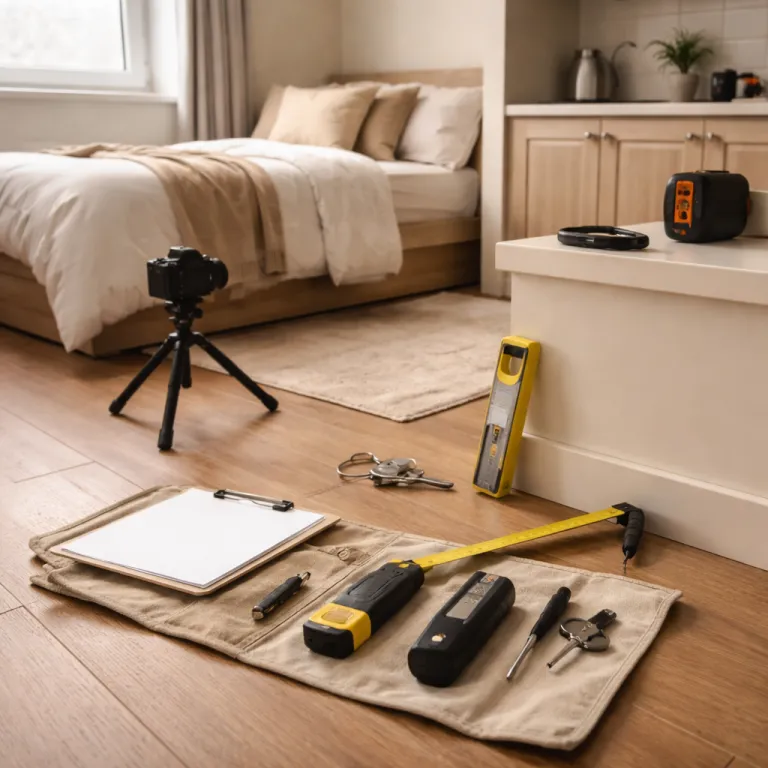
The ultimate student accommodation viewing checklist
A detailed student accommodation viewing checklist turns a glossy marketing tour into a focused inspection. Use this guide to move beyond staged photos and evaluate real living conditions, safety, and value before you sign a contract.
- Locate fire exits, alarms, and test door and window locks
- Run taps and shower to check water pressure and temperature
- Look and smell for damp, mould, and poor ventilation
- Assess noise levels in corridors, bedrooms, and near lifts
- Count storage space, power sockets, and study-friendly lighting
- Check Wi‑Fi or mobile data where you sleep and study
- Walk the building and neighbourhood at peak times
- Photograph existing damage and confirm repairs in writing
Why your student accommodation viewing checklist matters more than the photos
A curated student accommodation viewing checklist turns a glossy marketing tour into a precise inspection. When you walk into any premium property, you need to check how the accommodation will support your study rhythm, your living habits, and your budget over twelve intense months. A structured viewing checklist will help you move beyond the staged cushions and scented candles to the real living conditions behind the door.
Think of each viewing as fieldwork in your personal property search, where you test how the space feels at corridor level, not just in the show flat. The event is a formal property viewing, with clear objectives; you assess the property condition, evaluate whether the student accommodation fits your needs, and identify issues that could quietly erode your student life. Use the main content of your own ultimate checklist rather than letting an agent rush you through the tour and mentally push you to skip main questions that actually matter.
Housing complaint data from UK ombudsman and student union reports consistently shows that many early‑month problems relate to issues that a careful viewing would have revealed. Typical examples include weak water pressure, poor sound insulation, and damp patches hidden behind furniture. That is why your viewing checklist should include checks on safety, water pressure, noise, and storage space, not just the size of the bed or the shine of the fridge freezer. When you treat each viewing as a calm investigation, you protect both your study focus and your long term living comfort.
Luxury and premium student accommodation operators now lean heavily on immersive 3D tours and cinematic videos. Those tools are useful for narrowing your property search, but they rarely show corridor acoustics, bathroom ventilation, or how many students actually share the kitchen on a Sunday night. Use virtual viewing as a filter, then bring a printed checklist to the in person property viewing so you can check condition details that no lens will reveal.
Before you arrive, plan your route and test the transport links at the time you would usually travel to campus. A ten minute walk on a quiet afternoon can turn into a twenty minute squeeze on a packed tram when thousands of students move at once. Your viewing checklist should therefore extend beyond the property and into the neighbourhood, because student life is lived between lecture halls, cafés, and the streets around your building.
The 7am and Sunday tests: timing your viewing like an insider
One of the sharpest tools in any student accommodation viewing checklist is timing. If you can, arrange at least one viewing for early morning, around 7am, when night shift students return and cleaners finish their rounds. Walking the hallway then will help you check real noise levels, see how many windows and doors are propped open, and feel whether the property is calm or chaotic when you most need sleep.
The same logic applies to the shared kitchen, which is the beating heart of most premium student accommodation buildings. A spotless kitchen during a Tuesday afternoon viewing tells you very little about weekend living conditions, so try to visit again on a Sunday evening when the number of people cooking, chatting, and leaving dishes in the sink is at its peak. This simple timing check can reveal whether communal areas are respected by students or left to the cleaning équipe to rescue every morning.
During these timed visits, pay attention to smells as much as sounds. Lingering food odours, stale smoke, or the faint scent of damp mould in corridors can signal ventilation issues that no brochure will mention. Your viewing checklist should include a line to check the condition of extractor fans, bathroom vents, and any visible mould spots, because such details directly affect your health and your ability to study well.
Use the early morning walk to observe how the landlord or building management handles waste, recycling, and overnight deliveries. Overflowing bins, abandoned parcels, or sticky lift floors at 7am suggest that the accommodation team may not be as responsive as the sales pitch claims. When you later review premium subleasing strategies or guidance such as refined university subleasing for premium housing seekers, you will already know whether this particular property passes your own early hour test.
Remember that you are not just a student passing through; you are a paying resident assessing a serious contract. Take notes in a small notebook during each timed viewing, and do not forget to mark how you feel in the space, not just what you see. Later, when several properties blur together, those emotional impressions will help you choose the accommodation that genuinely supports your student life.
Room by room: an ultimate checklist for real living conditions
Once you step inside the flat, your student accommodation viewing checklist becomes a room by room script. Start with the entrance and living area, checking how the windows and doors close, whether they seal properly, and how much natural light reaches your study desk. Open every cupboard to assess storage space, because generous wardrobes and shelves will help you keep the living area calm rather than cluttered.
Move to the kitchen and treat it like a professional inspection, not a casual glance. Open the fridge freezer and check the condition of the seals, the temperature, and any signs of ice build up or mould, then look under the sink for damp, leaks, or improvised repairs that suggest long term water issues. Count the number of people officially sharing this kitchen and compare it with the number of hobs, ovens, and cupboards, because overcrowded cooking areas quickly turn premium accommodation into a daily frustration.
In the bathroom, run the taps and shower at full power to test water pressure and temperature stability. Watch how quickly the steam clears, which tells you more about ventilation than any brochure line about modern fittings, and check the condition of grout, sealant, and extractor fans for early signs of damp mould. Your viewing checklist should also remind you to flush the toilet, listen for strange noises, and feel for any soft spots on the floor that might signal hidden leaks.
When you reach the bedroom, imagine a full exam season week rather than a single night. Stand where your bed will go and check mobile reception, then sit on the bed if one is provided and test Wi‑Fi quality on your phone, because a strong signal at the desk means little if the mesh network fails where you actually rest and stream lectures. For inspiration on how refined student living can feel when these basics are right, look at detailed property reviews such as the guide to premium student apartments and luxury living near campus, then hold your current property viewing to the same standard.
Finally, walk the entire flat again with your checklist in hand and your phone camera ready. Take photos of any damage, stains, or unusual features, because these images will help you negotiate with the landlord and protect your deposit later. When you share Facebook updates or send images to parents and friends, keep a separate folder of factual evidence so your decision rests on clear data, not just social media impressions.
Safety, sound, and structure: questions that reveal how a property really lives
Safety is non negotiable in any student accommodation viewing checklist, especially in tall premium buildings. Start by locating every fire exit, alarm point, and extinguisher on your floor, then check whether the routes are clear or blocked by bikes, boxes, or abandoned furniture. Ask direct questions about fire drills, inspection frequency, and how often safety systems are tested, because vague answers here are a red flag for the entire property.
Sound is the second structural factor that shapes your daily living conditions. Stand in the room with the door closed and listen for corridor noise, lift sounds, and music from neighbouring flats, then repeat the check with the windows and doors open to gauge street noise and nearby transport links. If you can, ride the lift several times at different hours and time the wait, because a slow or overcrowded lift in a twelve storey building will affect your student life every single day.
When you meet the landlord or on site warden, move beyond polite small talk. Use your viewing checklist to guide three essential questions to ask the warden, not just the leasing agent: how maintenance requests are logged and tracked, how quickly urgent issues like water leaks are handled, and how noise complaints between students are resolved. Their answers will help you check whether the accommodation is run as a serious hospitality style operation or left to drift until problems escalate.
Structural feel also includes air quality and temperature control. Ask to see how the heating and cooling systems work, check the condition of radiators or vents, and look for condensation on windows that might hint at hidden damp mould behind walls. If the property offers premium amenities such as gyms or study lounges, visit them during your viewing and note the number of people using them, because overcrowded shared spaces can quietly undermine the luxury promise.
Remember that a well managed property will welcome your detailed questions and your checklist. Operators who specialise in refined student living, such as those featured in in depth reviews of elevated student living near campus, understand that informed students make better long term residents. Trust your instincts; if staff seem impatient with your safety and structure checks, this may not be the accommodation that will help you thrive.
Paperwork, people, and price: reading beyond the lease
A sophisticated student accommodation viewing checklist does not end at the front door; it extends into the paperwork that governs your stay. Ask the landlord or letting agent to walk you through the lease clause by clause, then check how deposits are protected, what is included in the rent, and how often prices can be reviewed. In many UK cities, recent student housing surveys suggest that average student rent in private rentals can sit around several hundred pounds per month, which underlines why every line of the contract deserves calm attention.
Use your checklist to record the number of people you will share with and how that aligns with your own study and living preferences. Some students thrive in large flats with constant movement, while others need quieter accommodation with fewer flatmates and more defined storage space for personal belongings. Ask clear questions about guest policies, cleaning schedules, and whether professional cleaners handle communal areas, because these details shape the real day to day experience more than any design feature.
People matter as much as price. During the viewing, observe how current students interact in corridors and shared lounges, then check whether noticeboards show active events, support services, and clear communication from management. If you feel comfortable, ask a resident how quickly maintenance issues are resolved and whether they would renew their contract; their informal feedback often reveals more than any brochure.
On the financial side, your viewing checklist should include a section for hidden costs. Ask about utility caps, laundry prices, and any extra fees for amenities, then check the condition of included items such as the fridge freezer, mattress, and desk chair to avoid paying later for pre existing damage. When you compare several properties, treat the total annual cost as seriously as you would treat tuition fees, because the accommodation you choose will either support or strain your overall study budget.
Finally, remember that you are not alone in this process. Bring parents, friends, or future housemates to at least one property viewing, and encourage them to ask their own questions while you focus on your checklist. Their fresh eyes may notice issues you miss, and their presence can also signal to the landlord that you are a serious, organised student who will look after the accommodation well.
From virtual tour to final choice: using your checklist to secure the right space
Most premium student accommodation platforms now offer immersive virtual tours, which are ideal for shortlisting options before you travel. Use these tools to map out the space, note where windows and doors sit, and estimate storage space, but keep a written student accommodation viewing checklist beside you so you can flag any areas the camera avoids. Pay attention to corners, ceilings, and bathrooms; if the virtual tour glides past them quickly, plan to check their condition carefully during an in person visit.
When you cannot travel for every property viewing, schedule live video calls with the landlord or agent and ask them to follow your checklist step by step. Request close ups of taps running to test water pressure, slow pans across ceilings to spot damp mould, and clear shots inside the fridge freezer and wardrobes to judge real living conditions. A professional operator who values safety and transparency will help you complete these checks without hesitation, while evasive behaviour should push you to continue your property search elsewhere.
As you narrow your options, use a simple scoring system linked to your viewing checklist categories. Rate each property on safety, study environment, overall living quality, transport links, and management responsiveness, then add a final column for how you feel in the space, because intuition matters when you will spend so many hours there. Tools like detailed neighbourhood level reviews of refined student living near campus, such as the analysis of refined comfort near campus at Lark Tuscaloosa, can serve as benchmarks for what well run accommodation looks like in practice.
Once you have chosen, send a written summary of any issues spotted during the viewing to the landlord before signing. Attach photos, reference your checklist points, and agree on repairs or replacements in writing so that both sides share the same expectations about the property condition. This disciplined approach will help you start your student life in the new accommodation with clarity, confidence, and a documented record that protects your deposit.
Throughout this process, remember the core purpose of your student accommodation viewing checklist. It is not to catch the landlord out, but to align your expectations with the reality of the property so that your study, social life, and wellbeing can thrive. When you treat each viewing as a professional inspection of the place you will call home, you give yourself the best chance of a calm, productive year.
Student ambassador stories: how real students use a viewing checklist
Student ambassadors for premium accommodation platforms often become experts in the art of the viewing long before they receive any formal title. One ambassador I spoke with described how her first year in a poorly ventilated flat, where damp mould crept behind wardrobes and water pressure dropped every evening, pushed her to design her own student accommodation viewing checklist for future moves. She now walks into every property with a calm confidence, checking windows and doors, storage space, and corridor noise before even glancing at the décor.
Another ambassador, who balances a demanding science study schedule with part time work, focuses his checklist on living conditions that protect sleep and concentration. He times the lift journey during peak hours, listens carefully for bass vibrations from nearby bars, and asks direct questions about Wi‑Fi mesh coverage on the bed as well as at the desk. His view is simple; if the accommodation cannot support eight hours of quiet rest and reliable connectivity, it is not worth the premium price.
Ambassadors also talk about the social side of the viewing. One advises prospective students to watch how staff greet current residents during a property viewing, because genuine warmth at reception often signals a well run building where safety and support are taken seriously. She encourages visitors to share Facebook messages with friends after each viewing, not for likes, but to capture immediate impressions before memory fades and properties blur together.
These ambassadors consistently stress the importance of asking clear, sometimes uncomfortable questions. They remind new students that "What should I check during a viewing?" has a straightforward answer: "Inspect property condition, safety features, and included amenities." They also repeat that "How can I identify potential issues?" is best answered by "Look for dampness, mould, and signs of pests."
Finally, ambassadors emphasise the value of understanding the landlord relationship from day one. They quote guidance such as "What questions should I ask the landlord?" with the precise answer: "Inquire about rent inclusions, deposit protection, and maintenance procedures." When you combine this advice with your own ultimate checklist and the lived experience of students who have already navigated several moves, you transform a simple viewing into a powerful tool for shaping the next chapter of your student life.
Key figures for smarter student accommodation viewings
- Recent National Student Housing Survey summaries indicate that average student rent in private rentals in many UK regions can sit around several hundred GBP per month, which makes a thorough viewing checklist essential for protecting your investment in accommodation.
- Multiple University Housing Report datasets suggest that a majority of students live in private rentals rather than university owned halls, so most students must assess property condition themselves rather than relying on university housing offices.
- Industry analyses indicate that well over half of student housing operators now offer immersive virtual tours, yet many still omit corridor noise, bathroom ventilation, and weekend cleanliness from their main content.
- Housing complaint data from student unions and tenancy advice services shows that a significant share of first month issues relate to problems that a focused thirty minute property viewing would have revealed, such as damp mould, weak water pressure, or poor sound insulation.
- Demand for en suite rooms and high speed internet continues to rise across major university cities, which means that students who check these features carefully during viewings are better positioned to secure premium spaces that genuinely match their study needs.
FAQ about using a student accommodation viewing checklist
What should I check first during a student accommodation viewing?
Start with safety and structure: locate fire exits, test windows and doors, and check the condition of locks, then move to water pressure, ventilation, and visible signs of damp mould. Once these essentials pass, you can assess storage space, layout, and how the property feels for daily study and living. Always record your observations in a written viewing checklist so nothing is forgotten later.
How can I identify hidden issues in a premium student property?
Use all your senses during the property viewing: look for stains, cracks, and condensation, listen for noise from neighbours and lifts, and notice any musty smells that might signal damp mould or poor ventilation. Run taps and showers to test water pressure and temperature stability, then open cupboards and check behind furniture where problems often hide. Taking photos and notes will help you compare properties and ask precise follow up questions to the landlord.
What questions should I ask the landlord or letting agent?
Focus on maintenance, money, and management. Ask how quickly urgent issues like leaks are handled, what is included in the rent, how deposits are protected, and how noise or behaviour complaints between students are resolved. Clarify the number of people sharing key facilities such as kitchens and bathrooms, because this directly affects your daily living conditions.
Is a virtual tour enough to choose my student accommodation?
A virtual tour is useful for an initial property search, but it should never replace an in person or live video viewing guided by your checklist. Digital tours rarely show corridor noise, weekend cleanliness, or subtle signs of damp mould, and they cannot convey how the space truly feels when you stand inside. Use virtual tools to shortlist, then verify every important point with a detailed checklist before signing.
How long should a thorough student accommodation viewing take?
A focused viewing guided by an ultimate checklist usually takes around thirty minutes for a single flat, plus extra time to walk the building and surrounding streets. This duration allows you to test water pressure, Wi‑Fi, lift wait times, and communal areas without rushing. Given the cost of student accommodation and its impact on your study and wellbeing, that half hour is one of the highest ROI investments you can make.