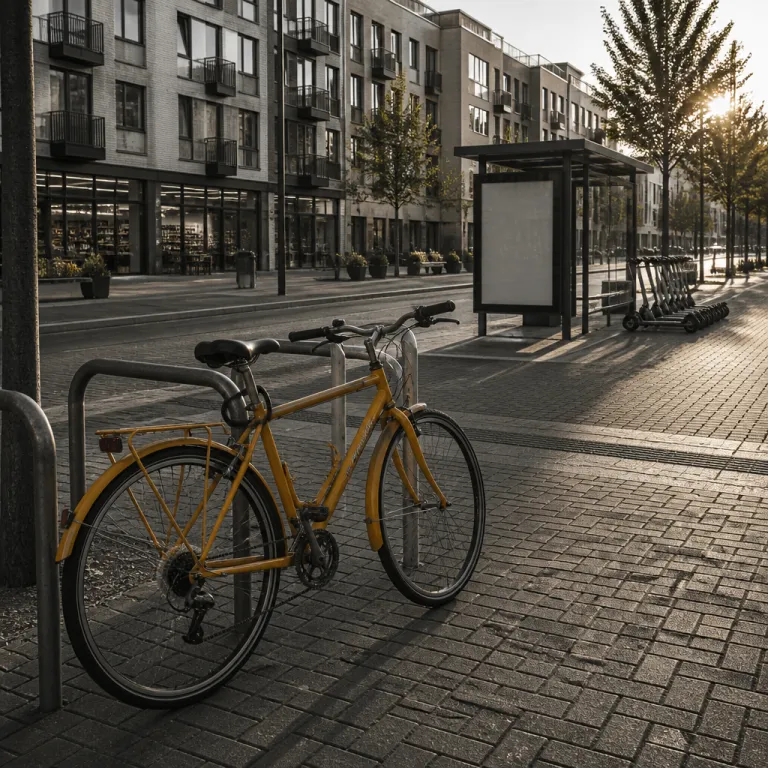
Where car free student living genuinely works
Car free student living is not a fantasy marketing line when the city wraps reliable transportation around your front door. In places like London Zone 2 and Zone 3, Bristol, Portland and Montréal, the combination of dense transit, safe cycling routes and compact neighbourhoods will help a student live comfortably without any private cars parked downstairs. When you book premium student housing in these districts, you are really choosing an integrated transportation ecosystem rather than a single property with a shiny lobby.
Start by asking whether students will be able to reach campus, part time work and late night groceries within thirty minutes without a car or any other private vehicles. In London, campus apartments in Stratford, Bermondsey or Kentish Town sit within a short walk of Underground lines, frequent buses and protected bike lanes, so the daily trip to class becomes a predictable, low stress routine rather than a negotiation for a parking spot. For example, Stratford is served by the Central and Jubilee lines plus the Elizabeth line, while Bermondsey students can rely on the Jubilee line and 24 hour buses such as the N199 and N381, according to Transport for London timetables.
Bristol’s student friendly Harbourside and Clifton areas pair compact streets with extensive bus corridors and bike sharing docks, which keeps the carbon footprint of student trips low while still feeling indulgent and urban. First Bus routes such as the 8 and 9 link Clifton to the University of Bristol campus every few minutes at peak times, and the city’s West of England e bike hire stations cluster around Park Street and College Green, giving students a realistic alternative to private vehicles.
Contrast that with car free promises on the suburban fringe of some U.S. cities, where the nearest rail station is 3 kilometres away and the last bus leaves before your evening seminar ends. In those locations, car ownership quietly becomes mandatory, and the supposed free car lifestyle collapses into insurance bills, fuel costs and a scramble for any available parking. When you evaluate luxury student housing, treat transportation options as seriously as square metres, because the wrong city block will lock you into cars and vehicles even if the brochure insists you will not need a vehicle.
Luxury student housing that is built around transit, not parking
High end student housing used to signal status with underground parking and a guaranteed parking spot for every unit. The most forward looking property management teams now reverse that logic and design apartments around transit access, bike storage and shared mobility instead of rows of private cars. In these properties, the most valuable amenity is not a vehicle ramp but a lobby that opens directly onto a tram stop or a protected cycleway.
When you tour or virtually inspect a property, ask to see the transportation plan before you even look at the gym or rooftop. A serious operator will show you detailed maps of bus corridors, metro lines and campus shuttles, explain the building’s parking policy and highlight how car sharing services such as Zipcar are integrated on site or within a two minute walk. This level of planning signals that the property is genuinely student friendly, because it recognises that a student or multiple students living car free need predictable, safe and frequent transportation options at every hour day and night.
Look for residences that treat sustainability as infrastructure rather than décor, the way LEED certified student housing does when it pairs energy efficient systems with transit rich locations. For a deeper sense of how serious operators think about energy and mobility together, read this analysis of LEED Gold student halls and real energy performance, then apply the same sceptical lens to any car free claims in marketing materials. If a luxury student housing provider cannot explain how its location, design and partnerships will help you avoid buying a car, you are looking at a branding exercise rather than a genuinely car free living environment.
Bike sharing, car sharing and the new mobility mix
In cities where car free student living actually works, the magic is in the mix of bikes, buses and shared vehicles rather than any single glamorous feature. A well run campus or private property will combine secure indoor bike rooms, on site repair stands and e bike charging with nearby bike sharing docks and clear wayfinding to the closest tram or subway. This layered approach means a student can choose walking for short trips, cycling for cross town journeys and car sharing only for the occasional bulky errand or weekend escape.
Car sharing services such as Zipcar and other vehicles on demand have quietly become the safety valve that lets students skip full time car ownership without feeling trapped. Many universities now partner with Zipcar College programmes, placing a free car membership or discounted hour day rates into the student welcome pack so that students will feel confident about the odd trip to a distant hiking trail or IKEA. When you assess premium campus apartments, ask whether the property management has reserved on street parking for car sharing vehicles, because a Zipcar parked 50 metres from the lobby will help you stay car free far more than a distant garage full of unused cars.
The best new builds go further and integrate digital access to mobility into their resident apps, letting a student book bike sharing, car sharing and campus shuttles from the same interface used for maintenance requests. This kind of tech enabled student housing is explored in depth in our guide to what resident apps actually deliver, and the same principles apply to transportation. For a glimpse of how this looks in practice, study projects like the six storey green student building at Capilano University, profiled in our feature on Vancouver’s new sustainable student residence, where bikes, transit and shared vehicles are designed into the daily rhythm of living.
The night time test and late hour safety
The real measure of car free student living is not the sunny midday commute but the walk home after a late lab or gig. Before you commit to any student housing, map the route from campus, library and nightlife back to the property at midnight and ask whether you would feel comfortable doing that trip without a car. If the answer is no, the building is not truly student friendly, no matter how polished the apartments or how persuasive the sustainability copy.
Universities and cities that take this seriously layer campus shuttles, frequent night buses and well lit pedestrian corridors so that students will always have at least two safe transportation options after dark. In some urban campuses with limited parking, the shuttle network effectively replaces private cars, looping between campus apartments, main teaching blocks and key transit hubs every half hour day and night during the academic term. When operators coordinate with city planners and transportation agencies, the result is an integrated system where a student can step off a late train, follow clear signage to a shuttle stop and reach their housing without waiting alone on a deserted corner.
Ask pointed questions about night service frequency, real time tracking and security, because these details will help you judge whether car free promises extend beyond daylight hours. A premium property should be able to show you data on shuttle usage, explain how staff support students returning from late trips and outline contingency plans when public transportation is disrupted. If the only answer you receive is that there is a bus somewhere in the city, assume you will eventually be paying for ride hails or even considering car ownership just to feel safe after dark.
Money, carbon and the real cost of keeping a car
For many students, the emotional pull of a car is strong, but the financial and environmental costs are stronger when you run the numbers. In dense cities with paid parking, insurance premiums and fuel prices, maintaining private cars can quietly add thousands of dollars per academic year to the cost of living. When you choose car free student housing in a transit rich city, that same budget can shift into better apartments, healthier food and more meaningful trips.
Think about every line item that comes with car ownership and ask whether your chosen property and city will help you avoid it. A building with limited or no resident parking, strong bike infrastructure and on site car sharing nudges students toward walking, biking and transit for daily transportation, reserving vehicles only for occasional trips that genuinely require them. Over time, this pattern cuts your carbon footprint significantly, especially when combined with campuses that already report a growing percentage of students without cars and cities where biking to work has roughly doubled in large metropolitan areas over the past decade, according to national urban mobility data.
There is also a psychological freedom in knowing that transportation options are handled by the city and campus rather than by your personal vehicle. Instead of worrying about a parking policy, theft or maintenance, you can treat each trip as a choice between walking, cycling, transit or a shared car, depending on the day’s needs. For sustainability focused students, this is where luxury really lies, because the premium is not in owning more cars but in owning your time and your environmental impact.
City by city: where you truly do not need a vehicle
Some cities make car free student living almost effortless, while others talk a good game but leave you stranded at the edge of a highway. In the United States, Portland, Oregon and Boston stand out for students because campus apartments cluster around light rail, bus rapid transit and dense bike networks, allowing a student to move between housing, campus and nightlife without touching a steering wheel. In Portland, for instance, TriMet’s MAX light rail connects Portland State University to neighbourhoods along the Green and Orange lines, while Boston’s MBTA Green Line and frequent bus routes link Boston University and Northeastern to downtown without requiring private vehicles.
Internationally, London’s Zone 2 and Zone 3 districts and Bristol’s compact core offer a similar blend of transit, walkability and student housing that supports a genuinely car free lifestyle. Transport for London reports that more than half of London households do not own a car, and student heavy boroughs such as Camden and Tower Hamlets combine Underground stations, night buses and Santander Cycles docks within a short walk of most halls. In Bristol, university travel surveys show that a clear majority of students commute by walking, cycling or bus, reinforcing the idea that the right location can make car ownership feel unnecessary.
Los Angeles is the classic cautionary tale, yet even there the picture is changing in specific pockets. Around the University of Southern California and parts of Westwood near UCLA, new student housing projects sit close to Metro rail stations, frequent buses and improving bike lanes, which means a student will be able to live car free if they choose their property carefully. The difference between a well located building and a cheaper but isolated one can be the difference between relying on transportation options such as walking and transit, or being pushed into buying a vehicle and hunting for parking every evening.
When you compare cities, apply the same checklist wherever you go, from Montréal to Manchester. Ask how many students live without cars, how integrated the campus shuttles are with city transit and whether bike sharing and car sharing vehicles are visible on every block around your prospective housing. If the answers are strong, you can book with confidence, knowing that your next trip to class, the market or a weekend escape will follow a sustainable, car free rhythm rather than revolve around a single parked car.
Key statistics for car free student living
- Across many U.S. campuses, internal surveys and housing reports suggest that roughly one third of students now live without cars, reflecting a measurable shift toward alternative transportation among younger residents, according to American College Health Association and university travel surveys.
- Large U.S. cities have recorded a substantial increase in biking to work over the past decade, which directly supports students choosing housing that prioritises cycling infrastructure, as shown in Census Bureau urban mobility data and city level bike count reports.
- Urban campuses with limited parking and strong transit links report reduced traffic congestion around student housing, showing how integrated transportation systems can reshape daily trips for thousands of students, according to university and city planning evaluations.
- Year round initiatives that combine walking, biking and public transit have been shown to lower the carbon footprint of campus communities, especially when paired with campus shuttles and bike sharing programmes, based on transportation agency assessments.
FAQ about car free student living
Do I need a car on campus if I choose transit oriented housing ?
No, many campuses offer alternative transportation options, and when you pair those with student housing near transit stops and bike routes, a car becomes more burden than benefit. In well planned cities, a student can reach classes, work and social life through walking, biking, campus shuttles and public transit. The key is to choose a property whose location and amenities support that lifestyle from day one.
What are common transportation alternatives for students who do not own vehicles ?
Walking, biking, campus shuttles and public transit are the most common transportation alternatives for students who do not own vehicles. Many premium student residences now add bike sharing docks, secure cycle storage and on site car sharing vehicles, which together cover almost every type of trip a student might need.
Are there bike sharing programmes available near most student housing ?
Yes, many universities provide bike sharing services and partner with citywide schemes. When you evaluate a building, check whether those docks sit within a short, well lit walk of the entrance, because that proximity determines whether you will actually use them for daily living.
Is public transportation reliable enough for full time students without cars ?
Generally, yes; many campuses are well served by public transit, especially in cities that invest in frequent bus and rail services. Reliability improves further when universities coordinate timetables with city agencies and run campus shuttles that bridge the last kilometre between stations and housing.
How can I plan my commute without relying on a private car ?
Utilise campus resources to map out walking, biking or transit routes, including any late night options. Combine that with digital tools from your housing provider, such as resident apps that show real time transit data and car sharing availability, so every trip feels intentional rather than improvised.