From cinema rooms to outcomes: how student housing design trends 2026 are shifting
Student housing once chased spectacle, with buildings competing on cinema rooms and rooftop lounges. Today, student housing design trends 2026 signal a quieter revolution, where the key focus is how students live, study, and stay well. Housing developers, universities, and real estate investors now talk less about themed spaces and more about measurable outcomes for higher education success.
This shift in housing trends is grounded in a mix of education research, post occupancy evaluations, and resident feedback, not just marketing mood boards. A 2023 survey by the National Multifamily Housing Council and Student Housing Business reported that around 70 % of students now prioritise functional amenities such as study areas and reliable Wi Fi over luxury features, and that preference is reshaping campus housing projects from state university towers to compact private schools residences. As one sector summary from the Association of College and University Housing Officers – International (ACUHO I) puts it without ambiguity: "Outcome led design in student housing means aligning buildings with student success and well being, not just aesthetics."
The amenity arms race is fading because extravagant spaces rarely improved grades, mental health, or community cohesion. Operators learned that cinema rooms sat empty while well lit study spaces overflowed, and that design construction budgets were better spent on quiet rooms, acoustic insulation, and reliable 100 Mbps plus internet. In a 2022 Greystar internal review of several North American assets, study room utilisation during peak exam periods exceeded 85 %, while media rooms averaged below 25 % occupancy. Outcome led design trends shaping the next generation of campus student buildings now prioritise building design that supports concentration, sleep, and social connection, rather than Instagram backdrops.
Academic performance as a design brief, not an afterthought
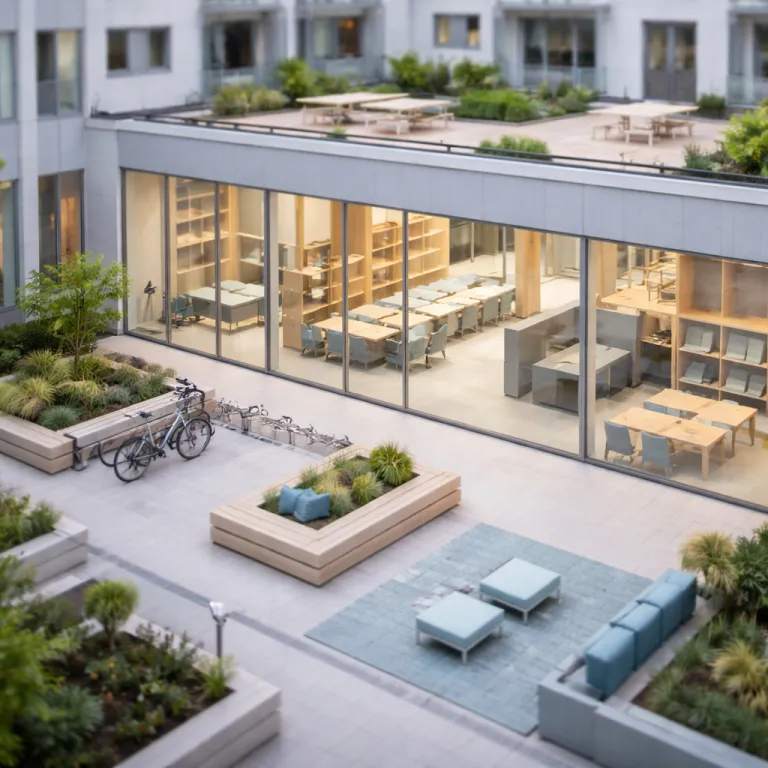
Walk into a high performing residence aligned with student housing design trends 2026 and the first thing you notice is not a slide in the lobby, but the density and quality of study spaces. Interior design teams now carve out layered zones: silent library style rooms, semi open collaboration tables, and enclosed pods for group projects that run late. These spaces are not decorative, they are calibrated to how students live during peak assessment periods in higher education.
Design firm briefs increasingly start with learning outcomes, asking how building design can reduce distraction and support deep work. That means construction choices such as thicker walls, better doors, and acoustic panels, but also lighting that mimics daylight and ergonomic furniture that students actually use for hours. At Oxford Village, profiled as a premium student accommodation in a vibrant community, internal resident surveys reported that the most praised amenity was not a games room, but a suite of bookable study rooms that feel closer to a campus library than a dorm lounge, with utilisation rates above 80 % during exam weeks according to a 2022 operator report. One resident quoted in that review noted that "having a quiet room I can actually reserve during finals has made more difference to my grades than any other amenity."
Outcome led housing trends also recognise that education today is collaborative and digital, not just solitary and analogue. Campus housing now integrates science technology needs directly into design construction, from plentiful power outlets and screens to sound treated project rooms for recorded presentations. In several recent refurbishments documented in the 2023 Global Student Living Index, operators reported double digit increases in resident satisfaction scores after upgrading these spaces, with academic support ratings rising by 10 to 15 percentage points. When student housing buildings treat academic work as the organising principle rather than an afterthought, they create spaces where students, whether at a state university or smaller private schools, can move fluidly between lectures, group work, and rest without leaving the building.
Mental health, privacy, and the new language of comfort
The most sophisticated student housing design trends 2026 treat mental health as a design discipline, not a wellness slogan. Developers and university housing teams now work with mental health organisations to map stress points in buildings, from noisy corridors to isolating layouts. The result is emerging design thinking that balances community and privacy more carefully, especially in high density campus student environments.
Where older projects often forced social life into one oversized common room, newer building design strategies create multiple smaller spaces, each with a clear purpose. You might find a calm lounge with soft lighting for decompression, a lively kitchen for shared cooking, and a flexible studio for yoga or peer led workshops, all within the same student housing complex. In properties positioned as part of a luxury booking gateway for discerning student residences, residents consistently rate these varied spaces higher than any single showpiece amenity, and operators report improved occupancy stability year on year. Data shared in the 2023 Global Student Living report indicated that schemes offering at least three distinct communal zones recorded renewal intentions around 8 percentage points higher than comparable single lounge layouts.
Privacy inside apartments is also being rethought by housing developers who now see it as a key ingredient in retention and loyalty, not a cost to be shaved. Smart interior design details such as offset bedroom doors, acoustic seals, and sliding partitions allow students to retreat without disconnecting from the community entirely. In one portfolio review by Unite Students in the UK, buildings that invested in enhanced acoustic performance and improved bedroom layouts saw renewal rates rise by approximately 4 % compared with older stock. When students live in buildings that respect both their need for quiet and their desire for connection, the housing supports not only academic outcomes but also long term mental wellbeing, which is rapidly becoming a central metric in higher education housing strategies.
Sustainability and technology as the new baseline, not the upgrade
Outcome led student housing design trends 2026 also align tightly with sustainability commitments and practical technology infrastructure. Net zero ambitions are no longer marketing copy: they are embedded in construction specifications, from solar panels on roofs to water saving fixtures in shared bathrooms. For students, this means living in buildings where sustainability is visible in daily routines, not hidden in a corporate report.
Design construction teams now treat energy performance as a core design driver, using high performing insulation, efficient glazing, and smart controls to reduce both emissions and operating costs. These choices matter for residents because lower energy use can stabilise rents over the duration of a degree, especially in markets where utilities are passed through to students. When a campus housing project publishes clear data on energy performance and explains them in plain language, it builds trust with a generation that reads ESG reports as closely as floor plans. For example, a 2022 report from The Scion Group on several US properties noted energy intensity reductions of 15 to 20 % after envelope upgrades and LED retrofits, alongside modest improvements in resident value for money scores.
Technology has undergone a similar reframing, shifting from flashy gadgets to reliable infrastructure that quietly supports how students live. Smart access, digital check ins, and maintenance apps are now standard in new buildings, while 100 Mbps plus internet is treated as non negotiable for science technology courses and remote seminars. Properties such as The Standard at College Park, often highlighted as elevated student living, show how integrating these systems into the core building design can create a seamless experience where residents manage everything from guest access to maintenance requests from their phones, contributing to strong satisfaction scores and high occupancy. In case studies shared by the operator, app based maintenance reporting has been linked to response time reductions of more than 30 %, a change residents directly associate with feeling better supported.
Community, operations, and what really differentiates premium student housing
Once every new building offers fast Wi Fi, decent study rooms, and bike storage, the question becomes simple: what truly differentiates one student housing option from another. The most interesting answer emerging from student housing design trends 2026 is not another physical amenity, but the quality of community programming and day to day operations. In other words, the software of the building matters as much as the hardware.
Operators who treat community as a core part of building design now programme spaces with intention, from weekly shared dinners to peer led language exchanges and career workshops. These activities turn generic common spaces into social infrastructure, helping students from different types of education backgrounds, including international cohorts and mature learners, to form real connections. In internal benchmarking reported by several European operators to the Class Foundation in 2023, buildings with structured community programmes achieved renewal rates 5 to 10 percentage points higher than comparable assets without them. When residents feel known by the on site team, supported by clear communication, and protected by a transparent privacy policy, they are far more likely to renew, boosting retention and stabilising real estate performance.
For a business leisure executive extending a trip to tour campus housing with a future student, this operational layer is where premium truly shows. High performing teams respond quickly to maintenance, enforce safety standards consistently, and use data ethically to refine services without overwhelming residents with notifications. Outcome led housing trends therefore reward not only good design firms and thoughtful construction, but also the quiet, daily work of creating communities where students can focus on higher education, friendships, and the life that happens between lectures.
FAQ
What is outcome led design in student housing?
Outcome led design in student housing means planning buildings and spaces around measurable student results such as academic performance, mental health, and community engagement. Instead of starting with eye catching amenities, design teams begin with questions about how students study, sleep, and socialise across a typical week. Layouts, materials, and services are then chosen to support those patterns in a practical, evidence based way, drawing on post occupancy evaluations and resident surveys.
Why is the amenity arms race declining in campus housing?
The amenity arms race is declining because operators have seen that high cost features like cinema rooms do not significantly improve grades, wellbeing, or retention. Surveys from organisations such as NMHC, ACUHO I, and Global Student Living show that students now prioritise functional amenities such as study rooms, reliable internet, and safe, comfortable bedrooms. As a result, housing developers and universities are redirecting budgets toward design construction elements that directly support higher education outcomes and can be tracked through utilisation and satisfaction data.
Which amenities do students now prefer in premium residences?
Students increasingly prefer amenities that make daily life and study easier rather than more glamorous. High quality study spaces, quiet sleeping environments, strong Wi Fi, secure access, and well equipped shared kitchens consistently rank above pools or gaming lounges in satisfaction surveys. Community programming, from academic workshops to social events, is also becoming a key differentiator in premium student housing, with buildings that invest in structured activities often reporting higher renewal intentions.
How does sustainability influence new student housing projects?
Sustainability now shapes everything from site selection to building materials in new student housing projects. Developers are integrating solar panels, efficient heating and cooling, and water saving fixtures to reduce both emissions and operating costs. These choices appeal to environmentally conscious students and can help keep total housing costs more predictable over several years, especially when energy performance improvements are transparently reported to residents.
What should parents and students look for when booking outcome led housing?
When booking, focus on how the residence supports study, sleep, and safety rather than on headline amenities. Ask about the number and quality of study spaces, acoustic design, internet speeds, and community support services such as resident assistants or wellbeing programmes. Reviewing the property’s privacy policy, sustainability commitments, and resident feedback or published satisfaction scores will also give a clear sense of whether the building is truly outcome led or simply rebranded marketing.