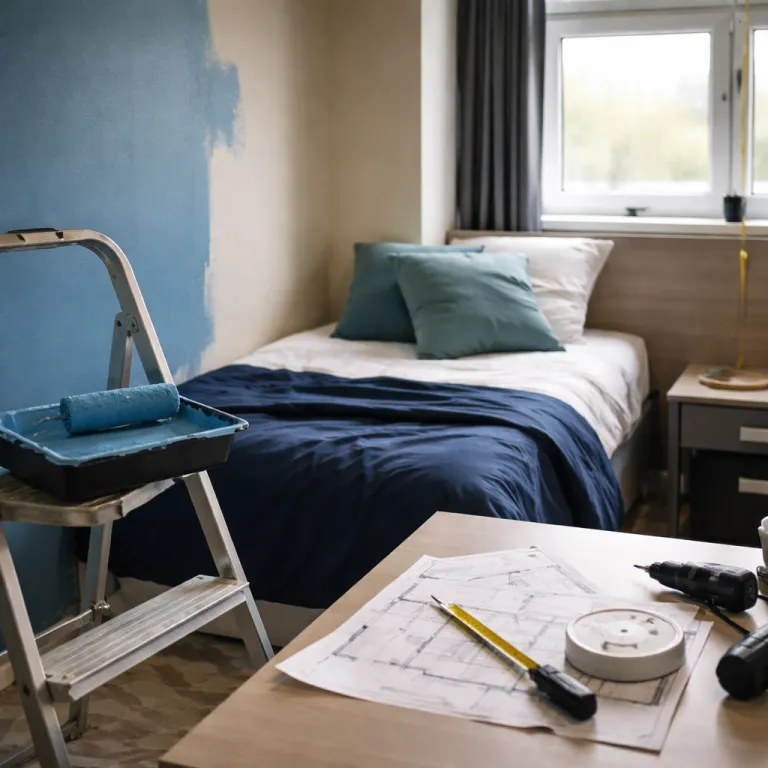
How “standard” has shifted in student accommodation
Standard student accommodation used to mean a narrow single bed, a desk and a wardrobe. Today, the term can quietly signal very different realities, and it can slip from marketing promise into disappointment if you do not read the fine print. On a premium booking platform, your goal is to translate that vague label into clear square metres, specific amenities and a layout that actually fits how you and your partner live.
Across purpose built student accommodation, or PBSA, bedroom sizes now average between 16 and 22 m² globally, yet the range between regions is dramatic. Industry benchmarks from large operators and sector analysts such as JLL and Savills, drawing on data from the early to mid 2020s, suggest that Asian cities such as Tokyo or Seoul often work with 12 to 16 m² rooms, while many European university hubs settle closer to 15 to 22 m² with shared kitchens and lounges. Survey based research from sources including the Global Student Living Index and Student Housing Insight reports, covering mainly Europe, North America and parts of Asia, indicates that around 55–60 % of new developments include co living amenities, but the quality of those shared spaces varies as much as the room sizes themselves.
Regulators have finally moved to close the gap between brochure language and lived reality. New student housing standards issued by national education ministries and housing authorities focus on safety, quality and standardized facilities, and they are being rolled out through policy updates, inspections and compliance audits across universities and private operators. A 2025 briefing from the European University Association, summarising reforms across several European systems, highlights “safety enhancements, quality improvements, and standardized facilities” as the core pillars now shaping student accommodation policy.
The four faces of standard: from classic single to premium studio
On a luxury leaning booking site, the phrase standard student accommodation usually hides four distinct sub categories. The classic single, ensuite single, studio and premium studio each serve different types of students and couples, and understanding the differences will quietly reshape how you shortlist properties. Think of them as a scale that runs from compact and social to private and apartment like, rather than a single fixed template.
The classic single is the baseline in many university halls, especially in the UK, Germany and France. Expect around 9 to 14 m², a single bed, desk, wardrobe and shelving, with bathrooms and kitchens shared along the corridor or within a small cluster flat. For couples, this category rarely works unless the operator explicitly allows two students and offers a wider bed plus upgraded storage, so always check the accommodation rules and occupancy policies carefully.
Move one step up and the ensuite single adds a private bathroom to roughly the same footprint. In the UK and US, these rooms often sit between 13 and 18 m², with a compact shower room carved out behind the bed or desk. For a couple, an ensuite single can feel tight but workable if the layout is efficient, the ventilation is good and the shared kitchen and lounge are genuinely well maintained rather than an afterthought.
The studio category changes the equation for students who want privacy and a more premium feel. Here you gain a self contained space with sleeping, study and kitchenette zones, usually between 18 and 22 m² in Europe and slightly larger in some US markets. For a pair of students or a couple, a well planned studio can feel closer to a small city apartment, especially when the building adds co working lounges, quiet study rooms and social terraces downstairs.
At the top of what operators still label standard sits the premium studio. These rooms stretch to 22 to 28 m² in many new developments, sometimes more in secondary US cities where land is cheaper. You will see upgrades such as larger beds, better acoustic insulation, dual workstations and more generous kitchenettes, which makes them particularly attractive for couples who plan to stay through multiple university terms. For a detailed look at how this premium end plays out in practice, the case study of Hudson style dorms in Hoboken, based on operator and local planning documents from the mid 2020s, shows how “reimagined premium student living” can still sit under a standard label on some booking platforms, while similar mixed use schemes in cities such as Austin and Rotterdam demonstrate how generous amenity floors and flexible studio layouts can reposition what students perceive as standard.
Square metres by region: what couples should expect
Room size is the most honest way to decode any standard student accommodation listing. For couples, the difference between 14 and 20 m² is the difference between living on top of each other and having space to breathe. Always start by checking the floor plan and the stated area, then compare it with regional norms rather than the marketing adjectives or photography.
In the UK, classic single rooms in university halls often sit between 9 and 14 m², while ensuite singles typically reach 13 to 17 m² and studios 18 to 22 m². Germany and France track similar ranges, though French residences in dense Paris districts may shave a couple of square metres off the studio category. Across continental Europe, a premium studio marketed as standard usually means 20 to 24 m², with a compact kitchenette and a small dining table that can double as a second desk for two students.
The US is more varied because many universities still rely on shared double rooms in residence halls. Where purpose built student accommodation has emerged, you will often see 16 to 22 m² for single occupancy rooms, with larger studios in secondary cities where land costs are lower. In Japan and South Korea, the pattern flips, with 12 to 16 m² rooms offset by dense amenity stacks such as rooftop lounges, co working floors and high quality shared kitchens that reward students who are comfortable living small.
To compare options quickly, it helps to keep a compact reference in mind. Typical ranges reported by PBSA operators and regional housing studies from the early 2020s are: UK and Western Europe: classic single 9–14 m², ensuite 13–17 m², studio 18–22 m², premium studio 20–24 m²; US PBSA: single rooms 16–22 m², studios often 20–28 m² in less central locations; Japan and South Korea: most rooms 12–16 m² with extensive shared facilities; dense city cores worldwide: studios can drop to 16–18 m², but usually with stronger co living amenities to compensate.
Regulatory updates now push both universities and private housing companies to meet minimum space and safety standards. Governments are using inspection checklists, reporting systems and smart technology to monitor compliance, and adoption rates are already high in many markets. Data from national education and housing bodies, including the UK Office for Students and the German Rectors’ Conference, covering mainly public universities and large private providers, shows that a large majority of universities are aligning with the new standards, while inspections of student housing have increased significantly to close the gap between policy and practice.
For couples browsing a premium booking website, this means you can be more confident that a 16 m² ensuite in London or a 20 m² studio in Berlin will at least meet baseline safety and facility criteria. The real question becomes whether the layout, light and storage feel generous enough for two people, and whether the shared spaces downstairs genuinely extend your living area. If you are weighing high priced options in cities such as London, a practical guide to honest alternatives can help you judge when a small but well designed room beats a larger yet poorly located one, as explored in this deep dive into realistic London student room alternatives based on recent rental and PBSA market analysis.
What standard furnishings and finishes mean now
Standard furnishings in student accommodation have quietly upgraded over the past decade. In many new builds, you can expect a proper mattress, a full sized desk, ergonomic chair, wardrobe, shelving and blackout blinds as a baseline. For couples, the key question is whether the bed is a true double and whether there is enough storage for two sets of lives, not just one.
Compared with older stock from several years ago, the difference in lighting, power access and connectivity is striking. USB charging points, multiple power outlets at desk height and integrated task lighting now appear in most new standard rooms, especially in private residences operated by large housing companies. Many properties also add built in pinboards, under bed storage and modular shelving that can be reconfigured, which helps students and couples turn a generic shell into something that feels personal without breaching any university rules.
Bathroom fittings have also stepped up, particularly in ensuite singles and studios. You are more likely to find thermostatic showers, decent water pressure and proper ventilation, even in compact 2 to 3 m² shower rooms. In premium studios, expect better quality fixtures, more generous mirrors and sometimes heated towel rails, which make daily routines more comfortable when two people are sharing a small space.
Beyond the furniture, the finishes tell you a lot about where a property sits on the standard spectrum. Hard wearing but attractive flooring, acoustic insulation between rooms and thoughtful window placement all contribute to how liveable a space feels for students who study, sleep and socialise in the same few square metres. When you tour or view photos, look for signs of wear on desk edges, wardrobe doors and bathroom grout, because these details reveal how seriously the operator takes maintenance and long term quality.
Regulators now expect both universities and private operators to maintain these standards consistently, not just at launch. Facility inspections and compliance audits are designed to catch gaps between the glossy marketing images and the reality of daily use. For couples booking through a premium site, this regulatory backdrop gives you leverage to ask direct questions about refurbishment cycles, mattress replacement policies and how quickly maintenance requests are handled.
Bathrooms, kitchens and the invisible standards that matter
When a listing calls itself standard student accommodation, the bathroom configuration is often the hidden variable. Shared, ensuite and studio setups each carry different implications for privacy, cleaning and how comfortably two people can live together. The language also shifts subtly between markets, so you need to read beyond the headline description.
In many UK and European halls, shared bathroom means a corridor arrangement with several toilets and showers serving 6 to 10 students. Cluster flats, by contrast, might group 4 to 6 bedrooms around two bathrooms, which feels more manageable for couples who value privacy but can live with some sharing. In Japan and South Korea, shared often implies impeccably cleaned facilities with strict schedules, while in some older US residence halls it can mean dated fittings and variable maintenance, so always check recent reviews and student feedback.
Kitchen access is equally critical, especially for couples who cook together and want to control food costs. A standard shared kitchen in European PBSA usually serves 4 to 8 students, with multiple hobs, ovens, fridges and a dining table that doubles as a social hub. In higher end properties, you may also find additional communal kitchens on amenity floors, which can transform the experience for students who enjoy hosting friends or experimenting with recipes from home.
Non room standards such as Wi Fi, heating, laundry and security often determine whether a property feels premium or merely adequate. High speed, building wide Wi Fi is now expected, but you should still check whether there are data caps, device limits or dead zones in older wings. Central heating or efficient climate control, on site laundry with app based payment and 24 7 staffed reception or secure access systems all contribute to a sense of ease that matters when you are balancing study, work and a shared home life.
Behind the scenes, government agencies and housing authorities are pushing for more consistent delivery of these invisible standards. Universities, private housing companies and regulators are working together through updated policies, inspection tools and reporting systems to ensure that safety, equitable living conditions and sustainability are not optional extras. For couples, this means you can focus your energy on comparing layouts, amenities and neighbourhoods, knowing that a baseline of safety and quality is increasingly enforced rather than just promised.
A practical scoring rubric for decoding “standard”
To cut through the marketing language, treat every standard student accommodation listing as a set of measurable criteria. For couples, a simple scoring rubric turns vague adjectives into a clear sense of value. You can adapt the following framework to any city, price point or property type on a premium booking site.
Start with space and layout, giving up to 10 points for room size and how intelligently it is organised. A 20 m² studio with a well placed bed, dual desks and good storage should score higher than a 24 m² room with awkward corners and wasted circulation space. Next, rate privacy and bathroom configuration, awarding more points to ensuite singles and studios if the shared kitchens and lounges are genuinely inviting rather than neglected.
Amenities and shared spaces deserve their own category, especially in buildings that market themselves as co living hubs. Score the quality of kitchens, laundry, study rooms and lounges, paying attention to natural light, seating and whether the design encourages students to mix without feeling forced. For couples, note whether there are quiet zones for focused work as well as more social areas, because you will need both across a long academic term.
Connectivity, safety and management form the final pillar of the rubric. Check Wi Fi performance, security measures such as CCTV and access control, and how responsive the management team is to maintenance requests and noise complaints. Regulatory compliance certificates, visible inspection records and clear housing policies from the university or operator are strong signals that the property takes its obligations seriously.
Once you have scored each category, compare the total against the monthly price and contract flexibility. A smaller but well managed premium studio in a central neighbourhood may offer better value than a larger, poorly run residence on the edge of the university district. For couples, the right standard student accommodation is the one where the numbers, the layout and the lived experience all align with how you actually plan to study, work and share a home together.
Key figures shaping standard student accommodation
- Purpose built student accommodation bedrooms now average roughly 16 to 22 m² globally, with Asian markets trending smaller at 12 to 16 m² and European standards typically between 15 and 22 m² with shared kitchens, according to aggregated data from major PBSA operators and sector reports by JLL and Savills published in the early to mid 2020s, which directly affects how comfortable a room feels for couples.
- Industry research from the Global Student Living Index and Student Housing Insight, based on survey responses from tens of thousands of students across Europe, North America and selected Asian markets, indicates that around 55–60 % of new student housing developments include co living amenities such as shared lounges, co working spaces and communal kitchens, although the quality and maintenance of these facilities vary widely between operators.
- Recent regulatory updates have led to an estimated 80–90 % of universities in many mature markets adopting new student housing standards focused on safety, quality and standardized facilities, based on compliance tracking by national education ministries and organisations such as the European University Association, which mainly monitor public and larger private institutions.
- Housing authorities in countries including the UK, Germany and Australia report inspection activity for student housing rising by roughly 25–35 % since the new standards began to roll out in the mid 2020s, reflecting a stronger emphasis on enforcement rather than voluntary adherence by universities and private housing companies.
- Implementation timelines for the updated standards typically span around 12 months in many jurisdictions, with clear milestones for announcement, initial implementation and final compliance deadlines, giving both universities and private operators a structured path to upgrade their accommodation stock and communicate progress to students.
FAQ about standard student accommodation
What are the key features of the new student housing standards ?
The key features of the 2026 student housing standards are clearly defined as “safety enhancements, quality improvements, and standardized facilities.” These standards, summarised in guidance from national education ministries and the European University Association and applied primarily across European and other mature higher education systems, apply to both university owned residences and private student accommodation providers. For couples, this means a more reliable baseline for room safety, fire protection, ventilation and essential amenities across different properties.
How can students check whether an accommodation meets current standards ?
Students should start by consulting their university housing office, which usually holds up to date information on which residences meet the latest regulations. It is also wise to ask the operator directly for compliance certificates or inspection reports and to review any publicly available housing authority records where these exist. When viewing a property, look for visible safety features such as smoke detectors, clear fire exit signage and secure access systems as practical confirmation.
Are private student accommodations required to follow the same rules as university halls ?
Yes, private student accommodations are generally required to follow the same core safety and quality standards as university owned halls in the jurisdictions where the new regulations apply. Regulators use policy updates, inspection checklists and reporting systems to ensure that all providers meet these obligations. For couples booking through a premium platform, this alignment reduces the risk that a stylish private residence hides substandard safety or maintenance practices.
What room size should couples aim for in standard student accommodation ?
Couples should usually aim for at least 18 to 22 m² if they plan to share a studio or premium studio for a full academic term. In dense Asian cities, smaller rooms can work if the building offers generous shared kitchens, lounges and co working spaces that effectively extend your living area. Always balance square metres against layout quality, storage and access to well maintained communal spaces.
How do shared bathrooms and kitchens affect daily life for couples ?
Shared bathrooms and kitchens can work well for couples who value social contact and are comfortable with a little less privacy. Corridor style shared bathrooms may feel less convenient, while smaller cluster flats with two bathrooms for four to six rooms often strike a better balance. High quality shared kitchens with enough hobs, ovens and fridge space can significantly reduce stress and food costs, especially when both partners cook regularly.