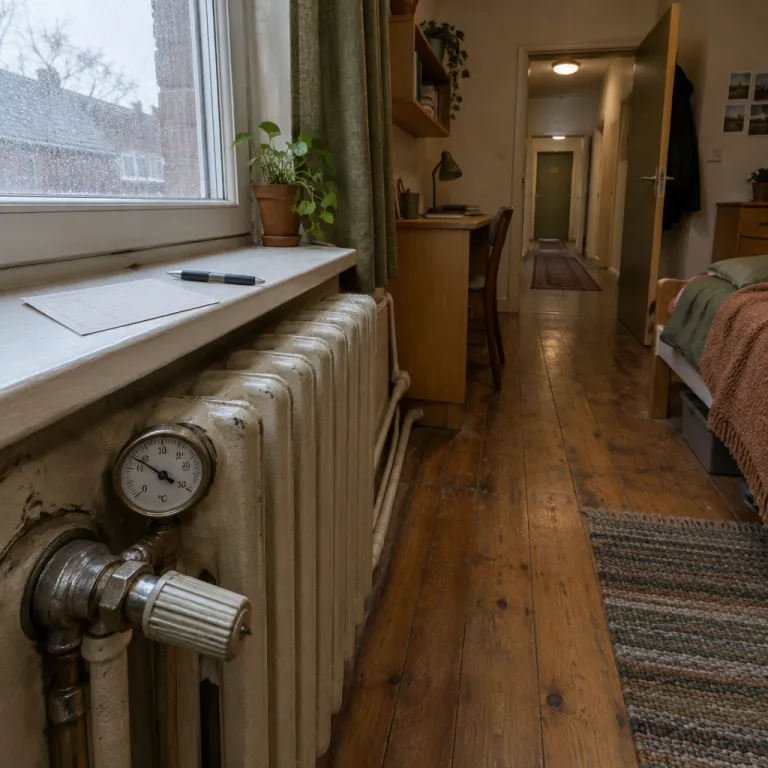
Why heating failures in premium student rentals are never optional
When the radiators fall silent in December, a luxury student apartment stops feeling like an upgrade and starts testing your student accommodation heating repair rights. In most United States cities, heating and hot water in a rental unit are treated as essential services under housing law, which means your landlord has a legal duty to keep your unit warm enough to protect health and safety. For any tenant weighing a premium rent against a standard rental, the real question is whether the operator treats heat as a non-negotiable part of the rental agreement or as a cost to be managed slowly.
Across the United States, housing code and landlord–tenant law usually place heating failures in the same urgent category as major leaks or electrical hazards, because a cold apartment in winter can quickly become a health and safety risk. That is why your rights and responsibilities as a renter are framed around the concept of a warranty of habitability, which means the rental unit must remain fit to live in throughout the lease, not just on move-in day. For example, New York City’s Housing Maintenance Code requires landlords to keep apartments at least 68°F during the day and 62°F at night between October 1 and May 31, while Chicago’s municipal code requires indoor temperatures of at least 68°F during the day and 66°F overnight during its official heating season. When you compare landlords on a premium booking platform, look beyond the décor and ask how fast they commit to heating repairs, what written notice procedures they require, and whether they explain how to deduct remedy costs if they ever fail to act.
In practice, luxury operators often promise faster repairs than the minimum required by landlord–tenant protections, but promises only matter if they are written into the rental agreement. A serious company will spell out what counts as an emergency repair, how to submit a written notice, and when a housing inspector might be involved if the landlord notice is ignored. Before you sign any lease, read the section on repairs and the amount of rent money you might be allowed to repair deduct, because that is where your real leverage lives when the heating dies in December.
Urgent repairs, timelines and how to hold your operator to them
When the boiler fails in midwinter, heating and hot water repairs usually sit at the top of any city’s emergency list, even if the exact code language varies. Local housing law often treats a loss of heat during the official heating season as a breach of the warranty of habitability, which means the landlord–tenant relationship shifts from casual emails to formal rights and responsibilities. One official guidance from a state attorney general’s office might put it bluntly: “How long before landlord must fix heat? Often 24 hours for urgent services under local housing code,” while another jurisdiction might allow up to 48 hours if outside temperatures are milder.
In New York City, for instance, landlords must begin restoring heat as soon as they receive a complaint, and repeated failures can trigger violations and civil penalties from the Department of Housing Preservation and Development. In Chicago, the Department of Buildings can issue fines for each day a landlord fails to maintain required temperatures, and tenants may be able to seek rent abatements in court when the problem persists. Elsewhere, state landlord–tenant statutes often use phrases like “within 24–48 hours” for emergency repairs affecting health and safety, especially when outside temperatures fall below freezing.
On a premium booking website, you will see glossy photos of every apartment, but the real test is how the operator responds when a tenant sends a written notice about a freezing bedroom. A professional landlord will log your complaint, confirm the time, and give you a reasonable repair window, then follow up with a landlord notice once the contractor is booked. If that does not happen, you move from polite chasing to using the escalation ladder that landlord–tenant law gives you, including contacting a housing inspector or seeking legal aid when the delay becomes unreasonable.
For families booking high-end student housing, it is worth checking reviews for patterns about slow repairs and vague timelines, because repeated stories of tenants waiting days for heat suggest deeper problems with rights and responsibilities. Some operators, especially large landlords with many buildings, now publish service-level commitments that promise specific response times for any repair that affects health and safety, and those are worth paying for with a slightly higher amount of rent. To understand how market shifts are giving students more leverage on these issues, read about the occupancy shift and negotiating power on this detailed guide to student negotiating power, then use that knowledge when you ask for clear timelines in your own rental agreement.
The paper trail that protects you when the temperature drops
When you are shivering in a supposedly premium rental unit, it is tempting to rely on quick messages to the front desk, but your student accommodation heating repair rights depend on a solid paper trail. Always follow up any phone call with a dated written notice that describes the problem, the temperature in the apartment and how long the heating has been out, then keep screenshots or emails in a dedicated folder. This simple habit turns a vague complaint into a clear landlord notice that can be shown to a housing inspector, a legal aid attorney or even a court if the dispute escalates.
Photographs and short videos are powerful evidence, especially when they show condensation, visible breath in the air or electric heaters scattered around the unit, because they document the impact on health and safety. Many landlord–tenant disputes over repairs come down to whether the tenant reported the issue promptly and whether the landlord responded within a reasonable time, so your dated messages matter as much as the broken boiler itself. If you ever need to pursue a deduct remedy strategy, where you repair deduct from your rent money after giving proper notice and reasonable opportunities to fix the issue, that documentation will be crucial to avoid later arguments about the amount you withheld.
Premium operators increasingly offer online portals where tenants can log repairs, track progress and download copies of every rental agreement or lease addendum, which makes your record keeping easier. Use those tools, but also save independent copies, because a change in management or a change in software should never erase your history as a tenant. For more practical tips on turning a bare room into a livable space while you navigate repairs, including how to manage temporary heaters safely, explore this guide to making a student room feel like somewhere you belong before the first cold front arrives.
Interim fixes, compensation and when rent reduction becomes fair
Even when a landlord moves quickly, there is often a gap between your first written notice and the final repair, and that is where interim solutions matter. In a well-run luxury apartment building, management will usually offer temporary heating units, extra blankets or even a temporary move to another rental unit while the main system is repaired. Those gestures are not just hospitality; they are part of how landlords meet their warranty of habitability obligations without forcing tenants to seek legal remedies.
If your operator offers portable heaters, ask clear questions about electrical safety, fire alarms and where you can plug them in without overloading circuits, because health and safety is still the priority. When the entire unit is uninhabitable for more than a short period, it becomes reasonable to ask about a partial refund of rent money or a credit on the next rent payment, especially in premium rentals where the amount you pay assumes full comfort. Some landlord–tenant laws also allow a repair deduct or deduct remedy approach, where you pay for a necessary repair yourself and subtract that amount from the rent, but this usually requires strict compliance with local procedures and may expose you to disputes over attorney fees if done incorrectly.
Families booking for their children should ask operators in advance how they handle compensation when essential services fail, and whether this is written into the rental agreement or left to case-by-case discretion. A transparent policy that explains when rent reductions apply, how long a repair can reasonably take and how tenants will be notified of any change in timelines is a strong sign of a responsible landlord. When you compare properties on a premium booking platform, treat these policies as seriously as you treat location or amenities, because they determine your real leverage when the heating dies in December.
Escalation ladders and the difference between big operators and small landlords
When polite emails fail and your student accommodation heating repair rights are still being ignored, you need a clear escalation ladder that fits the scale of your landlord. In a large professionally managed apartment complex, the first step is usually the on-site team, then the regional management, then a formal complaint through the company’s official channel, each backed by written notice and documented repairs. Smaller landlords may not have layers of staff or CRM systems, but the same landlord–tenant principles apply: you start with a clear tenant notice, then move to external help if the response is inadequate.
External help can include a city housing inspector, a local health department or a tenant union, all of which can pressure a landlord who ignores code requirements about heat and hot water. If the situation remains unresolved, some legal frameworks allow you to withhold an amount of rent or seek court orders, and “Can I withhold rent? Yes in many states if landlord fails to fix essential heat and after proper notice” becomes more than a line in a handbook. In extreme cases, “Can I terminate lease? Yes when condition is serious and unremedied violating habitability law” may apply, especially when the apartment remains unsafe despite repeated opportunities to repair.
Premium student accommodations often sit in the middle ground between corporate scale and personal attention, which can be an advantage when things go wrong. A well-run property like those highlighted in guides to elevated student living, for example at this Tallahassee student residence near Florida State, will usually have both a responsive on-site team and clear legal processes for serious repairs. Whatever you choose, make sure the lease explains how to change locks if a contractor needs access, how attorney fees are handled in any landlord–tenant dispute and how any change in management affects your existing rental agreement, because those details shape your leverage long after the first December cold snap.
Student ambassador stories: how real tenants use their leverage in winter
Student ambassadors who have lived through a December heating failure tend to judge luxury rentals less by the lobby and more by how fast the boiler is back online. One ambassador from a high-end complex in Boston described how a coordinated wave of written notice messages from multiple tenants, each citing their rights and responsibilities under local law, pushed management to prioritise repairs within hours. Another ambassador in Chicago explained that when a landlord tried to downplay a broken system as a minor issue, a single call to a housing inspector, backed by photos and a clear landlord notice history, changed the tone of the conversation overnight.
These stories underline a simple pattern: tenants who understand the warranty of habitability, keep careful records and know when to seek legal aid usually secure faster repairs and fairer outcomes. Ambassadors often coach new residents on how to read a rental agreement, what a reasonable repair timeline looks like and how to use deduct remedy options without jeopardising their lease, especially when the amount of rent is high. They also share practical tips, such as agreeing in advance on how to handle emergency repairs when you are away, how to manage access to the unit without compromising locks or needing to change locks unnecessarily and how to split communication duties in shared apartments so that no tenant notice falls through the cracks.
For families booking through a premium platform, these ambassador stories are a reminder that even the best landlords sometimes face system failures, but the difference lies in how they respond. A landlord who welcomes questions about legal protections, explains the landlord–tenant escalation ladder and is transparent about any change in building systems is usually one you can trust when the temperature drops. When you read reviews or speak to current tenants, listen for details about how management handled past repairs, whether rent credits were offered and whether any disputes over attorney fees or legal processes were resolved calmly, because those are the real markers of a winter-ready home.
FAQ
How quickly should my landlord restore heat in winter?
Local housing code often treats a loss of heat during the heating season as an emergency that must be addressed very quickly, sometimes within a day. In New York City, for example, landlords must provide heat whenever the outdoor temperature falls below 55°F between October 1 and May 31, and they are expected to act immediately once a complaint is made to the city’s 311 system or directly to management. The exact timeline depends on your city and state, so you should check local law or speak with legal aid for precise guidance. Whatever the number, your landlord must act within a reasonable time once you provide written notice that the rental unit is without heat.
Can I withhold rent if my apartment has no heat?
Many jurisdictions allow tenants to withhold an amount of rent or use a repair deduct approach when a landlord fails to fix essential services like heat after proper notice. In some states, you may be required to pay withheld rent into a court escrow account, while in others you can repair deduct up to a set percentage of the monthly rent. You usually must follow strict landlord–tenant procedures, such as sending a dated landlord notice and giving a final chance to repair, before you stop paying full rent money. Because the rules are technical and mistakes can lead to eviction claims, it is wise to consult legal aid or an attorney before using this remedy.
When does a heating problem justify breaking my lease?
If a lack of heat makes the apartment unsafe or uninhabitable for an extended period, some legal frameworks allow you to terminate the lease based on a breach of the warranty of habitability. The key questions are how severe the problem is, how long it has lasted and whether the landlord has ignored reasonable written notice and opportunities to repair. Before you move out, document conditions carefully, speak with a housing inspector if possible and seek legal advice to avoid disputes over remaining rent obligations.
Who should I contact if my landlord ignores my heating complaints?
Start by escalating within the company, moving from the on-site team to higher management while keeping a record of every tenant notice message. If that fails, you can contact a city housing inspector, a local health department, a tenant union or a legal aid organisation, all of which can pressure a landlord who is violating housing code. In serious cases, you may need to ask a court to enforce your student accommodation heating repair rights, especially when health and safety is at risk.
What should be written into my rental agreement about heating and repairs?
A strong rental agreement will state that the landlord must provide heat and hot water, explain what counts as an emergency repair and outline how to submit a written notice. It should also describe expected repair timelines, any right to repair deduct or deduct remedy, how attorney fees are handled in disputes and how to change locks or grant access for contractors. When you review a lease for a premium student apartment, treat these clauses as carefully as you treat the rent amount or move-in date, because they define your leverage when the heating fails.
Sources
U.S. Department of Housing and Urban Development (HUD) guidance on tenant rights and habitable housing conditions
New York City Housing Maintenance Code and Department of Housing Preservation and Development (HPD) heat and hot water rules
City of Chicago Municipal Code and Department of Buildings heating requirements for residential rentals
Local city or county housing code enforcement agencies in the United States
Legal Services Corporation and affiliated local legal aid organisations