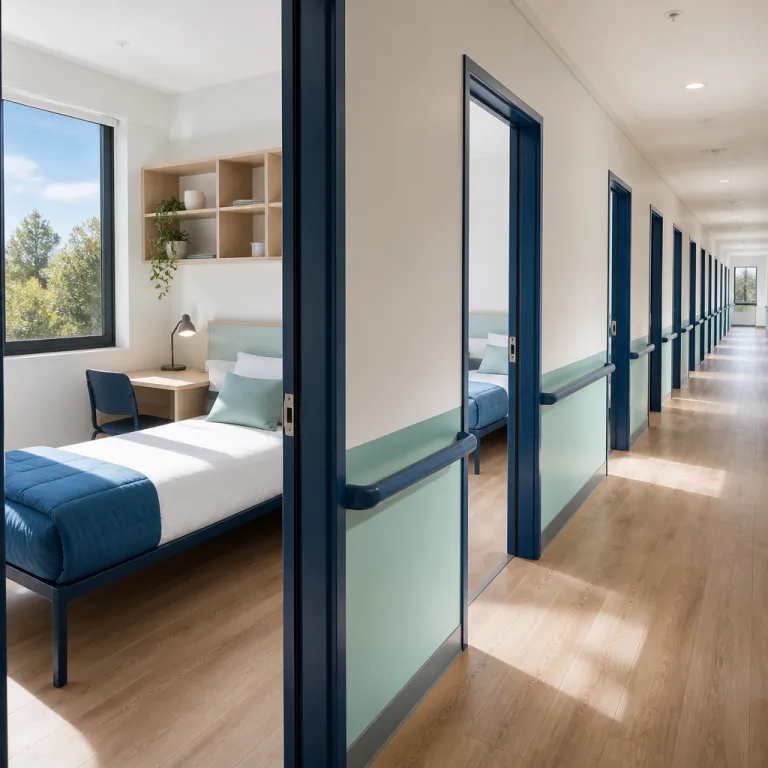
Where the next generation of premium student beds will actually open
Australia’s student housing pipeline now exceeds 47,000 beds, and that scale matters if you are a family planning a long term university stay in a new city. The latest national report on the current pipeline shows 47,233 beds in purpose built student accommodation, with more than 14,100 beds under construction and the rest still waiting for planning approval in a system where policy can accelerate or stall delivery. For any international student or Australian student comparing accommodation options, the timing of beds construction is now as critical as the star rating or the cost per week.
Melbourne sits at the top of the Australia student accommodation pipeline 2026 story, with 12,656 beds in the pipeline and a heavy tilt toward projects still in planning rather than active construction. That imbalance means students see glossy renders of high quality, green star rated towers near the university precinct, while only a fraction of those beds will be ready when student demand peaks again. Sydney, by contrast, has strong international students numbers but a thinner pipeline, because regulatory friction in New South Wales slows planning approval and keeps the accommodation sector structurally undersupplied.
Policy makers and property developers now treat student housing as infrastructure, not a niche asset class, and that shift is reshaping which regional hubs feel livable for premium minded families. One official explanation captures the new logic clearly ; “Policies linking student visas to housing drive development.” For parents weighing an australia student experience in a dense inner city campus against a quieter regional university in Adelaide Perth or other emerging markets, the location of each new bed in the pbsa pipeline can quietly determine commute times, community feel, and whether your student walks home from class in five minutes or forty.
How state policy and regulation shape price, quality and green credentials
Behind the headline number for the Australia student accommodation pipeline 2026 sits a more nuanced map of winners and laggards, and that map is drawn by state level regulation. Western Australia and South Australia currently attract more private sector investment into purpose built student housing, because investors see clearer rules, faster planning approval processes, and a political appetite to add beds close to campus rather than push students into the private rental market. In practice, that means Perth and Adelaide Perth now host a growing cluster of premium, high quality student accommodation buildings with strong green star ambitions and a service profile that feels closer to an upscale residence than a basic dorm.
New South Wales and Queensland tell a different story, where regulatory uncertainty and community opposition slow construction and keep the current pipeline thinner than student demand would justify. Sydney’s international student population remains intense, yet the number of students bed options in purpose built blocks lags behind, pushing many students into older housing stock with lower star rating performance and weaker sustainability credentials. Families willing to look beyond the headline city may find that a regional campus in Perth or Adelaide offers a better balance of cost, quality, and access to new green star rated buildings that have been designed as built student communities from the ground up.
For renters tracking global capital flows into student housing, the Australian pattern mirrors other markets where policy clarity unlocks scale, as seen in mega investments analysed in this guide to large PBSA investment strategies and what they mean for renters. In Australia, the same logic now channels money toward states where the accommodation sector is treated as a partner in international education policy rather than an afterthought. That is why the pbsa pipeline in Perth and Adelaide is thickening, while some east coast cities still rely on incremental conversions instead of bold new construction that can genuinely reset the market for international students and domestic students alike.
What premium focused families should watch in the evolving pipeline
For a family booking a high specification student accommodation, the Australia student accommodation pipeline 2026 is less about abstract numbers and more about concrete choices over the next few academic intakes. The national data shows 47,233 beds in the pipeline and 14,100 already under construction, but the gap between those figures means many advertised projects will not be ready for the first lease your student signs. When you compare properties, ask whether the bed you are reserving sits in a completed building, a beds construction phase with a firm delivery date, or a planning approval stage that could still shift with local politics.
Policy driven development also changes the texture of premium options, because government incentives often reward green design, community facilities, and integration with university precincts. Families who care about sustainability should look for explicit green star or similar star green certification, not just marketing language about eco friendly features, and should check whether the star rating applies to the whole building or only to specific systems. In cities where the accommodation sector is tightly linked to international student policy, such as Perth and Adelaide, you are more likely to see purpose built projects that add generous communal kitchens, study lounges, and wellness spaces rather than simply maximising the number of beds per floor.
Regulation also shapes how concentrated ownership becomes, which matters for service consistency and rent setting, and this dynamic is unpacked in depth in our analysis of what large operators and mergers mean for student renters. In Australia, the same forces are at play as the pbsa pipeline expands, and families should pay attention to whether a building is run by a specialist student housing operator, a university partner, or a generalist landlord with limited experience in student demand cycles. The most resilient options for an international student or an australian student usually combine purpose built design, transparent cost structures, and a regulatory environment that treats student housing as a long term pillar of the education market rather than a short term experiment.