Why luxury student accommodation is now a data engine
Smart student accommodation is no longer just about keyless doors and fast Wi-Fi. In premium student housing, every swipe, tap, and sensor ping generates data that quietly defines how residents move, study, and socialise. For any student or future student booking a high end room, understanding this student accommodation data privacy proptech landscape is now as essential as checking the distance to your university.
Modern student housing built as PBSA, or purpose built student accommodation, runs on a dense layer of property technology that tracks building performance and resident behaviour. Entry and exit logs, energy usage in your 20 m² studio, laundry machine cycles, parcel deliveries, and app based maintenance requests all become structured données inside real estate systems. These data points help property management teams refine service levels, but they also raise sharp questions about data privacy, access control, and who exactly will view your digital footprint over the academic year.
Luxury operators investors treat these buildings as living laboratories for cutting edge proptech, often ahead of mainstream multifamily real estate. Resident apps promise a seamless user experience, from smart access to curated events, while quietly collecting data analytics on what students click, attend, and ignore. For you as a student, the housing crisis and intense demand for well located accommodation mean you may accept any privacy policy just to secure a bed, yet the long term impact of this data on your student living journey and beyond deserves a calmer, more informed view.
What your building actually tracks: from doors to devices
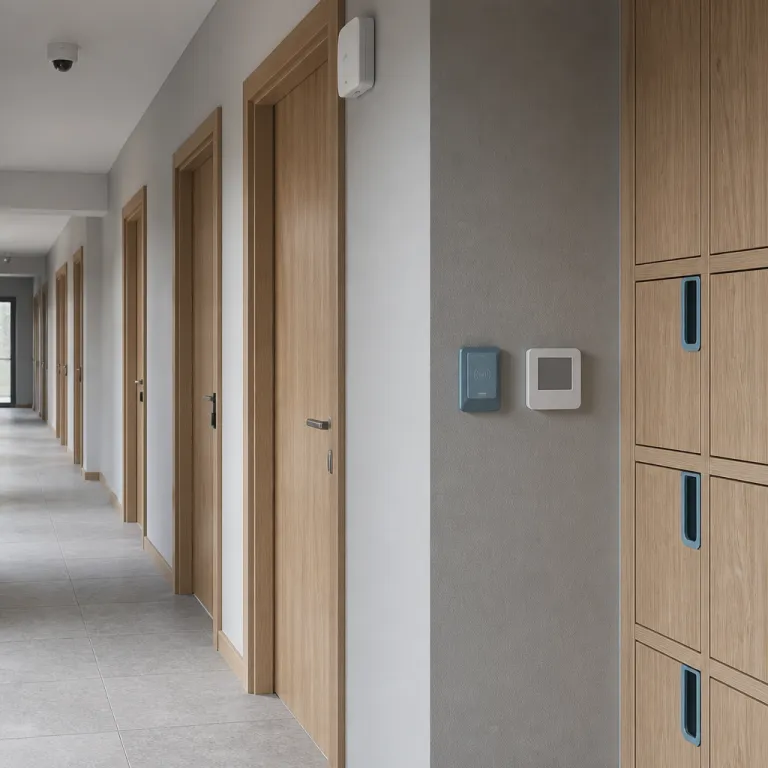
When you tour a polished student accommodation lobby, the visible technology feels reassuringly simple. You see sleek smart access panels, discreet CCTV domes, and perhaps a tablet where residents log parcels or guests. Behind that calm façade, the student accommodation data privacy proptech stack is logging far more than most students realise.
Every time you badge into the entrance, tap the elevator, or open your floor corridor, the access control system records a time stamped event linked to your profile. In many PBSA properties, these logs are combined with CCTV footage, Wi-Fi connection records, and even gym or study room bookings to create a detailed view of student living patterns. The result is a powerful data set that can improve security and real estate operations, but also risks drifting into surveillance if property management teams and external operators investors are not tightly governed.
Premium student housing often layers on building wide sensors that monitor temperature, air quality, and energy consumption at room level. At places marketed as refined student living near a major university, such as high specification communities similar in spirit to elevated student living near the University of Florida, these systems help maintain comfort while optimising estate costs. Yet each sensor reading is still data, and when combined with app activity, maintenance tickets, and social event RSVPs, it becomes possible to infer when residents are home, who they spend time with, and how their daily rhythms evolve over the year.
Who sees your data and what privacy policies really allow
Most students assume that only the on site team can access their housing data, but the reality is more layered. In a typical PBSA or premium student accommodation, at least three parties touch your information : the local property management équipe, the asset manager or real estate owner, and one or more proptech vendors providing apps and building systems. Each party may also work with external data analytics firms, cloud hosting providers, and security contractors, expanding the circle of access far beyond the reception desk.
Privacy policy documents often state that data will be used to improve service, enhance security, and support property technology innovation. Buried deeper, you may find clauses allowing sharing with affiliates, operators investors, or third parties for research, marketing, or portfolio optimisation across wider student housing estates. For a student focused on exams and social life, these phrases feel abstract, yet they authorise real flows of data between companies, sometimes across borders with different data privacy regimes and different interpretations of residents’ rights reserved under local law.
Luxury student living brands increasingly position themselves as lifestyle platforms rather than simple accommodation providers. Their apps encourage you to subscribe newsletter updates, join events, and connect with other residents, which generates more granular data about preferences and social networks. When this crosses from basic property management into behavioural profiling, the line between efficient service and intrusive monitoring blurs, especially in dense urban buildings marketed as elevated city living similar to the experiences covered in urban central accommodation guides.
Global rules, local realities : how law shapes your rights
Your rights over student accommodation data privacy proptech are heavily shaped by where your building stands. In Europe, the General Data Protection Regulation, or GDPR, treats students as data subjects with strong rights to access, correct, and delete their données, and to object to certain processing. In the United States, protections are more fragmented, with state level privacy laws in places like California or Virginia offering stronger safeguards than others, while Australian students fall under the Australian Privacy Act with its own consent and notification rules.
For international students moving between regions, the same style of PBSA or student housing brand may operate under very different compliance expectations. A living university community in London might offer detailed dashboards where residents can request data access and see retention periods, while a similar real estate asset in a US college town may provide only a generic privacy policy link at the bottom of the app. In fast growing markets where the housing crisis drives urgent construction, such as the Australian student housing pipeline highlighted in analyses of policy driven PBSA building booms, regulation sometimes lags behind the speed of property technology deployment.
Whatever the jurisdiction, you should expect clear explanations of what data will be collected, how long it will be stored, and who can access it across the estate and partner network. Look for privacy policy sections that explain whether smart access logs, CCTV, and app usage are used only for security and maintenance, or also for marketing and investor reporting. If the language feels vague or heavily weighted toward operators investors interests, that is a signal to ask sharper questions before you sign a lease for what may be your most data intensive year of student living so far.
How to stay in control without opting out of smart living
Opting out of every connected system is rarely realistic in premium student accommodation. Smart access, digital maintenance requests, and app based parcel notifications are now standard service features, and refusing them can make daily life harder. The goal is not to abandon student accommodation data privacy proptech, but to shape it so that technology serves you rather than the other way around.
Start by reading the privacy policy before you book, not after you arrive exhausted from a long flight to your new university city. Check whether you can disable certain analytics features, limit marketing communications, or use physical keys alongside access control cards or mobile credentials. Ask whether CCTV footage is routinely combined with other data analytics, how long logs are kept, and whether residents can request a copy of their data or a clear view of which third parties receive it.
Once you move in, adjust app settings to the minimum data sharing needed for smooth property management and security. Decline optional social features that track attendance or location if they feel intrusive, and be cautious about linking your student housing app with external social media accounts. When a building markets itself as cutting edge real estate powered by property technology, that innovation should include transparent dashboards, easy unsubscribe or subscribe newsletter controls, and visible statements that your rights reserved under local law are respected as carefully as the marble in the lobby.
When smart buildings become surveillance machines
There is a point where helpful student accommodation data privacy proptech tips into something more unsettling. When every late night entry, every guest visit, and every quiet afternoon in the study room is logged, the atmosphere of student living can shift from relaxed independence to constant observation. Luxury student accommodation should feel like a secure home, not a monitored experiment in behavioural science.
Warning signs include vague explanations about who can view access logs, pressure to use social features in resident apps, and a lack of clear channels to challenge data use. If operators investors talk enthusiastically about data driven insights into student behaviour without mentioning safeguards, retention limits, or independent audits, the balance between service and surveillance is probably off. In a healthy PBSA ecosystem, property management teams use data to fix broken lifts quickly, optimise cleaning schedules, and enhance security, not to track which residents attend which events or how often they stay overnight elsewhere.
As a student or future student, you can push back by asking for transparency reports, questioning why certain data is collected, and choosing accommodation providers whose privacy policy reads like a genuine commitment rather than a legal shield. The most credible real estate brands in this space treat data privacy as a core part of their class foundation, not an afterthought, and they design smart access, access control, and other technology so that residents remain firmly in charge of their own digital narrative. That is the future of student housing : premium, connected, and respectful of the quiet rights reserved that make a place feel like home.
FAQ
What personal data does a smart student accommodation usually collect ?
Most smart student accommodation buildings collect identification details from students, access control logs from doors and gates, CCTV footage in common areas, and usage data from resident apps. They may also gather maintenance requests, parcel delivery records, and sometimes Wi-Fi connection metadata. In more advanced PBSA properties, energy consumption and environmental sensor readings can be linked to individual residents or specific units.
Can I refuse to use the resident app and still live in the building ?
Whether you can refuse the app depends on the operator and the property management model. Some PBSA and student housing estates make the app optional, offering key cards and email based communication as alternatives. Others design the entire service journey around the app, so you should ask this question before signing a lease if you have strong data privacy concerns.
Who is allowed to see my access logs and CCTV footage ?
Access logs and CCTV footage are typically available to authorised members of the on site team, central property management staff, and sometimes external security providers. In some real estate portfolios, aggregated data may also be shared with operators investors for performance monitoring. You have the right in many jurisdictions to ask who can view this data and under what circumstances it will be disclosed to third parties.
How can I check what data my student accommodation holds about me ?
The first step is to read the building’s privacy policy and look for a section on data subject rights or resident rights. Many student accommodation operators provide an email address or portal where you can request a copy of your data, ask for corrections, or object to certain uses. In regions covered by GDPR or similar laws, the operator is legally required to respond within a defined timeframe and explain any refusal.
Does smart building data affect my life after I move out ?
In most cases, operational data such as access logs and maintenance tickets is retained only for a limited period after you leave. However, aggregated analytics about student behaviour, occupancy patterns, and service demand may be kept longer to guide future student housing investments. This is why it matters to choose providers who clearly state retention periods and commit to using long term analytics in ways that respect former residents’ privacy.
Sources
Information in this guide is informed by regulatory guidance from the European Data Protection Board, reports from the International Association of Privacy Professionals, and research by the Urban Land Institute on PropTech in student housing.